For Christmas 2025 we chose to visit Senegal on a simple (TUI) all inclusive holiday at the RIU Baobab in Pointe Sarène. We booked this holiday during the January 2025 sale for a brilliant price over the festive period. We typically pore over holiday/flight prices, weather forecasts and holiday opening hours for months before finding a trip over Christmas because the prices can be ridiculous; making this booking a rarity really.
We knew that we wouldn’t be content to just spend a week in an all inclusive hotel so before we went through with the booking we looked at what day trips and excursions we could complete, hoping that we might even be able to visit The Gambia during the trip. Unfortunately The Gambia was off the cards as it’s quite inconvenient to get to from Pointe Sarène, but a safari at Bandia Wildlife Reserve was definitely on the list.
We looked at how we could DIY the safari, at least making our way there independently, but when considering the following prices and faff-factor it made sense for us to book the TUI offer at just 65 EUR each, knowing that it’d be the most convenient in terms of paying (by card at the hotel), communication (excellent English speaking guides) and efficiency.
http://www.reservedebandia.com/home.html
| Adults | 18,5€ |
| Children until 12 years old | 10,5€ |
| Use outside vehicle(personal,taxi,car) | 15€ |
| Safari truck rental with up to 11 seats | 61€ |
| Safari truck rental up to 24 seats | 91€ |
| Guide (compulsory)per vehicle | 10€ |
The morning of the safari we needed to hop onto the coach by 7:20 so we made sure we were there and waiting in the lobby at 7:00. As we sat and waited, the others in the lobby started to stir, none as much as two Dutch ladies who sprang up and began running out of the lobby and into the car park at an olympic pace.

We glanced behind and noticed a man standing silently with a sign for the safari and an arrow pointing behind him. At this point the Dutch sprinters were out of sight and we assumed had made it to the wildlife reserve already given the pace they set off at, fortunately however we spotted they had only made it to the coach in the carpark and so we joined an orderly queue behind them whilst the guides checked our names against their lists.
The ride to the park was quite pleasant, the coach was comfortable and had plenty of spare seats meaning we found ourselves sat right at the front and the windows were clear enough so we could enjoy watching village and city life as we travelled through Nianing, Warang, Mbour, Saly and Nguekhokhe. Even in the large coach with a cautious driver it only took an hour to get to the park, but we still saw lots of interesting sights on the way.

Our hopes were fairly low for the park, seeing that it was only established in the 90s and is fairly small at 35 square km, but the entrance seemed as authentic as the national parks we’ve visited in other nations, perhaps let down slightly by the bus-sized theme park-esque safari vehicles. We arrived at 8:15 and were given a brief comfort break because the safari could take up to three hours without a chance to break. I took the opportunity to watch some Splendid Starlings and a house cat playing with some of the workers.

Getting onto the safari vehicle was a little chaotic, naturally. The group was (logically) split into English and French speakers, but for whatever reason it was decided by the safari gods that we would be combined, much to the displeasure of the speedy Dutch tourists who made a point to protest this change of plan. Apparently their olympic-qualifier sprint did not guarantee them VIP seating privileges on the safari. The guide did his best to speak both English and French throughout, but I found it hard to listen with the constant language changes. No matter though – here to see cool animals more than listen to the guide!
After this relatively low start to the safari, we found ourselves seated on one of the larger vehicles, but sat in a nice spot on the truck so things were looking up a little bit. The next minute was devastating however, we entered the park, turned the corner and pulled up to an enclosure with hyenas in it. At this point we were really concerned that we had just entered a zoo and that we weren’t going to get an authentic safari experience at all. The hyenas didn’t seem to be housed in an ethical enclosure either. Oh dear.
The ranger did try to justify the enclosure by saying the hyenas kill the animals in the reserve so they need to be kept in here, but I don’t quite understand keeping them at all if they aren’t allowed in the reserve.

It didn’t take long to pick back up though, the enclosure bit was just at the entrance and the next part of the experience felt far more authentic. We traveled for 10 minutes or so before spotting and photographing a small group of giraffes, noticing a beautiful Abyssinian Roller in the tree next to them too.


Not 5 minutes later we spotted our first ostrich in the distance and a roan antelope a moment after. 3 minutes later we watched a troop of patas monkeys playing in the trees, jumping up and down from the ground.


We were on a bit of a mission then though, the ranger was keen to find us their rhinos so we headed to the edge of the reserve and he hopped out, looking at tracks and droppings, hopping back on and directing the driver one way, hopping off and looking at tracks before sending us another way. He was keen to tell us he never uses his mobile phone to find the animals; he’s old school and skilled and will find us the rhino(s) the proper way.
It didn’t take him long though, within 10 minutes he had found us a beautiful female rhino, although sadly with an injury to her front thanks to the aggressive male. After she walked away, the ranger managed to track the male rhino and we sat and observed him for a little while until he walked by the side of the vehicle. Amazing!


Apparently the horn isn’t trimmed to keep the rhino safe from poachers, he can’t be trusted to keep his horn because he keeps attacking the female which is what the injury you see in the photos above was from.
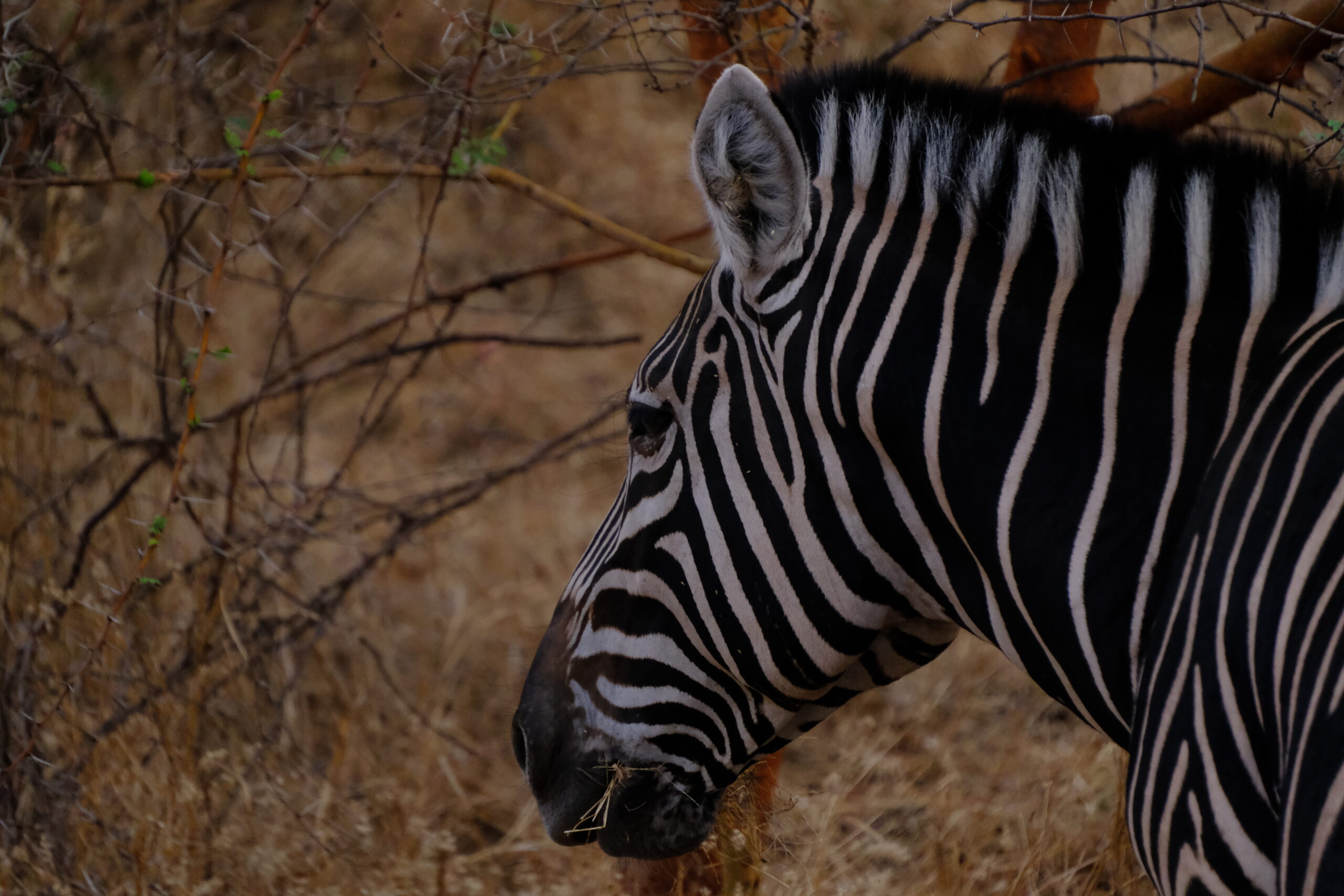
We couldn’t stay by the rhino forever though unfortunately so off we went, soon spotting a dazzle of Zebras and a couple of bantengs wandering around the bush. The bantengs had vibrant-beaked Yellow-Billed Oxpeckers on them, only flying off when the safari vehicle got a little too close.


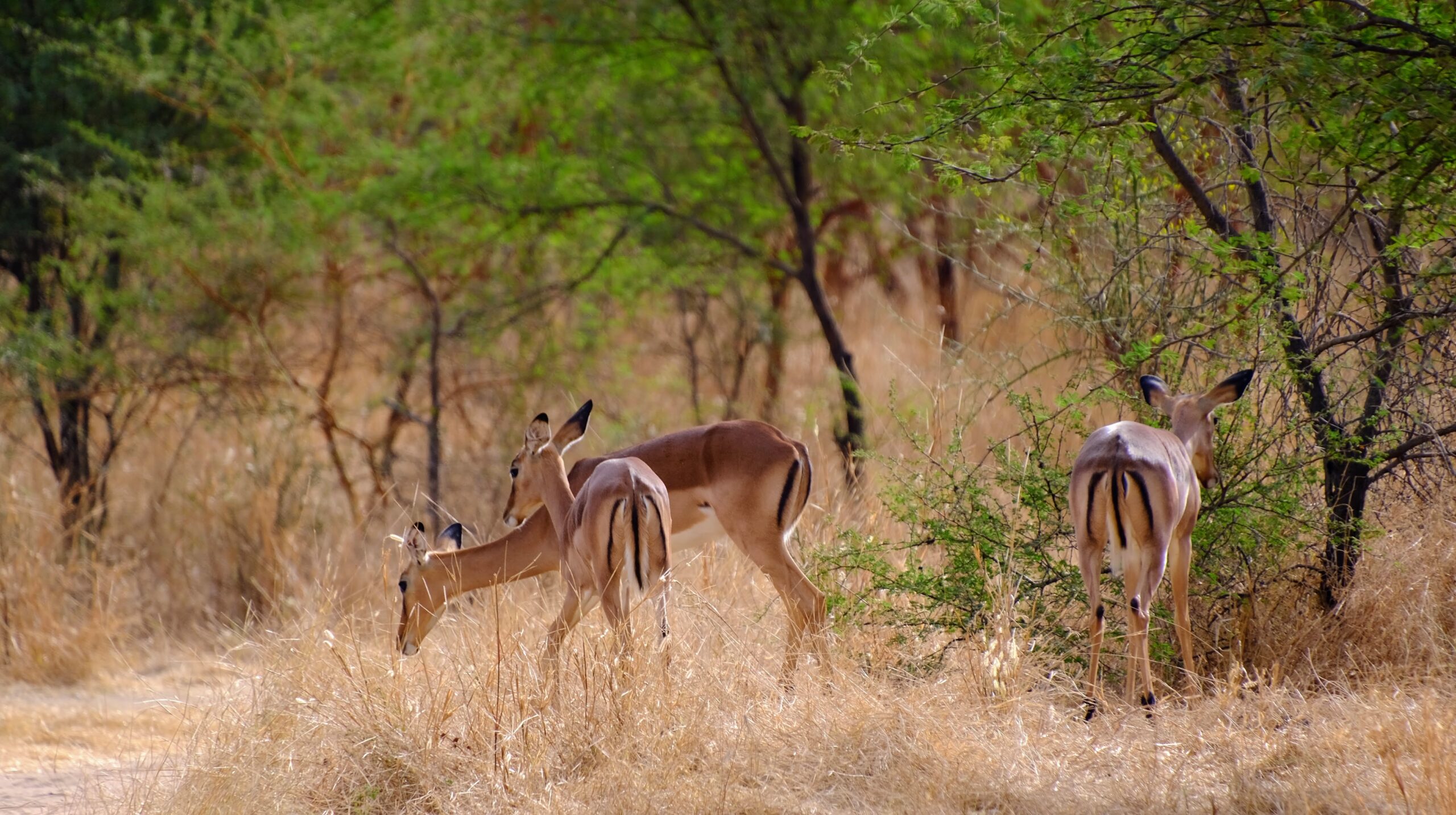
We then started to approach water with a large group of impalas behind us, three giraffes next to it, crocodiles on the opposite bank and an ostrich to the far right away from the bank. Two of the giraffes were play fighting, gently swinging their necks against each other, then slowly wrapping them around the other until they got bored and chomped away at a nearby tree. It was at this point I realised I’d accidentally set my shutter speed super-high and that any zoomed in photos I’d taken were probably trash – whoops! If you were wondering why they are so dark/HDR to this point that’s why.



Once their antics had ended, we moved onto a famous and sacred 1000-year-old baobab tree which our ranger told us contained the remains of a ‘griot’.

From what I understood, bearing in mind the French and English mixed lesson, a griot is a knowledgeable person who can act as judge and jury for the community who holds the knowledge about the village and passes this on generation to generation. They are not buried because it would be disrespectful to not be able to honour their presence more freely and it could also mean the village loses the knowledge.
As we were being told this, a family from a jeep in front had two very naughty children who were poking at the remains and throwing stones into it through a grate. I tried to alert the ranger to this, but he seemed disinterested. I did wonder if the remains are there as a draw for tourists rather than the genuine ones. Reading online after it did appear that the remains of all the griots have been relocated to special cemeteries in the last few decades which might explain the lack of care about the clear disrespect shown. Terrible parents regardless though, right?! Even if it was just a prop, maybe don’t let your kids throw stones into sacred cultural sites?
After we’d learned about the baobab, we jumped out the vehicle to wander around it and take photographs. Another couple started to stray back towards the water, but the ranger quickly warned us to not stray too far because the ostriches can appear quickly and aggressively attack the group. I always think of ostriches as threat-less silly leggy birds, but apparently their kicks are super powerful and can kill humans (and lions) so maybe I’ll respect the danger a little more in future. This isn’t much of an issue for Tarnya however, she is not a fan of these animals at all – even standing far back from them when they are in enclosures. I’m sure we went through an ostrich enclosure in Romania or somewhere because I remember rushing through because she was a little scared, but perhaps it was an emu habitat if these critters are so dangerous?
Sadly this was the finale and once we boarded the vehicle we swiftly head back to the park – this time going to a waterhole with a restaurant and shop at the bank. As we pulled up and parked, we were treated to warthogs in the entrance/road area; the Dutch guests approached a little too quickly and got shouted at to stand back by the ranger. We walked through the restaurant to look at the waterhole which we discovered was teeming with nile crocodiles and had some Spur-winged Lapwings, a Great White Egret, a Squacco Heron and lots of others birds a little too distant to photograph and identify.


Before leaving the park we had a brief look in the gift shop where they sold hundreds of mini baobab trees, many inside magnetic pouches. Probably not the best thing to bring home and put onto the work fridge so I’d have to find a work-appropriate magnet later. The shop was fairly boutique, selling lots of pretty things at quite premium prices, but that seems pretty typical for the region. After leaving the gift shop and wandering around the entrance I found a couple of monkeys roaming around and had a look inside a tortoise enclosure where a large fellow was making some very funny sounds.


Conclusion
After some concerns about the safari and whether it was going to be like a zoo, I think we were both really happy with our experience and felt it was a great way to spend our Christmas morning. There are some negatives, the vehicles are huge, uncomfortable and very noisy and the enclosures at the entrance are a disappointing start to a safari, but the experience in the reserve was pleasant with animal sightings every couple of minutes and a wide variety of animals to view. The pace of the safari was good, with enough chance to take photos of animals before moving, even when animals were perhaps less desirable which was a problem we often had in Ghana where some of the rangers seemed to only care about seeing elephants and encouraged the driver to continue moving when we wanted to look at almost any other animals.
Well worth a visit, especially for the very low price compared to other reserves around Africa and the rest of the world.
Leave a Reply